Why Use a Buffered Channel? Worker Pools & Batch Aggregation in Go
A deep dive into Go's buffered channels, showing how worker pools, backpressure, and atomic database flushes are implemented in production.
System design deep dives, low-level design patterns, cloud-native engineering, and backend development guides.
A deep dive into Go's buffered channels, showing how worker pools, backpressure, and atomic database flushes are implemented in production.
A deep technical dive into building a distributed DAG execution engine, covering scheduling, state consensus, idempotency, backpressure, and fault tolerance.
Explore the power of Directed Acyclic Graph (DAG) execution engines to automate and parallelize complex, dependency-aware task graphs at scale.
A comprehensive guide to caching in distributed systems, covering external caching with Redis, in-process caching, CDNs, and client-side strategies.
A deep dive into Event-Driven Architecture (EDA) for high-scale distributed systems. Learn how to implement Saga workflows, the Transactional Outbox pattern, and CQRS.
Master Kubernetes internals - from control plane scheduling and container runtimes to resource limits, cgroups, and rolling updates.
Learn how to implement the Dependency Inversion Principle in Go, mapping abstractions to interfaces to decouple high-level logic from low-level details.
How the Liskov Substitution Principle translates to Go's implicit interfaces and distributed architectures, ensuring behavioral contracts aren't broken.
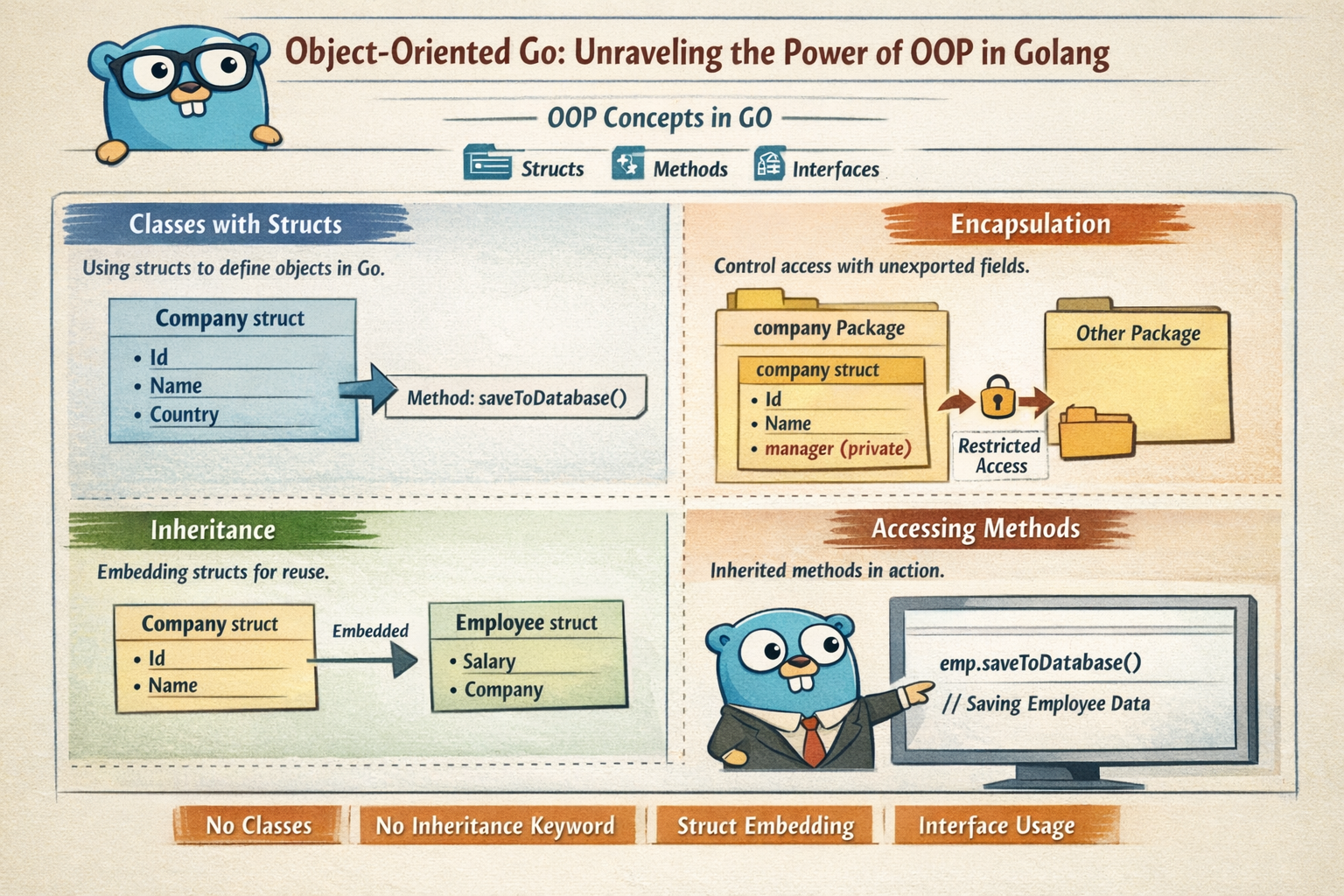
Go doesn't have classes, but it has package-level encapsulation, interface composition, and method attachment. Let's explore pragmatic OOP in Go.
A senior engineer's guide to scalability, sharding keys, database replication, horizontal scaling, and cost-efficient scheduling.
Try adjusting your search terms or filters.
RECRUITER ASSISTANT